
Instant Encrypted Communication for Disaster Relief Teams
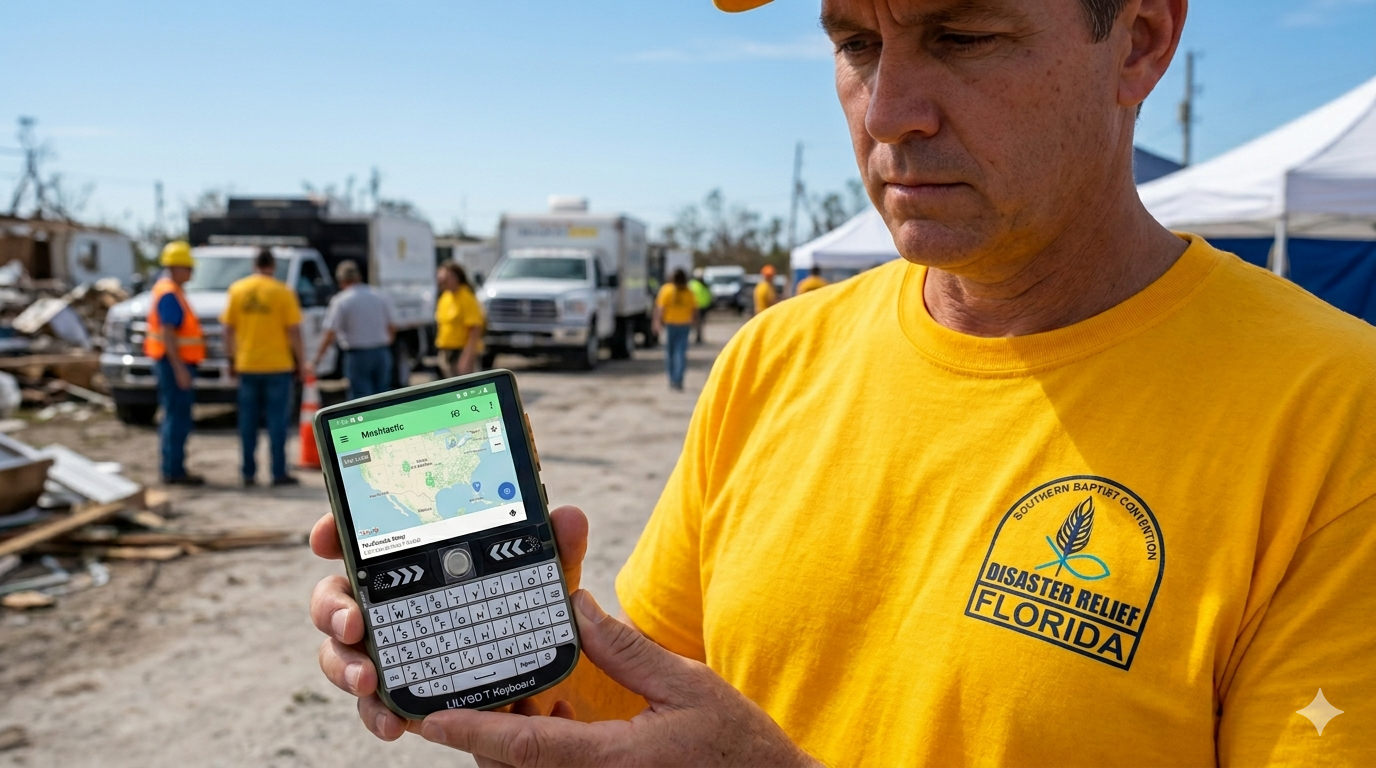
Deploying Meshtastic Enabled T-Decks for Disaster Relief
When disaster strikes—be it a hurricane, wildfire, or flood—the first casualty is almost always the communication grid. Cell towers lose power, fiber lines are severed, and traditional networks vanish exactly when they are needed most. For relief organizations, waiting for the "bars" to come back isn't an option.
The solution is an Instant Mesh: a self-healing, off-grid communication network that requires zero infrastructure and zero existing towers.
The "Plug-and-Play" Relief Strategy
In a high-stress deployment, there is no time for technical troubleshooting or firmware updates. Modern relief groups are now moving toward a Pre-Staged Deployment Model.
Organizations can pre-purchase Meshtastic nodes in bulk that come factory-flashed with the latest stable firmware. These "relief-ready" kits are stored in go-bags, charged and ready. When volunteers arrive at the staging area, they aren't handed a manual; they are handed a live device. Because the devices are pre-configured to the organization's specific frequency and settings, the mesh begins to form the moment the first two devices are powered on.
No Infrastructure? No Problem.
One of the most common misconceptions about mesh networking is the need for "routers" or fixed towers. While permanent high-altitude nodes are great for long-term community resilience, they are not a requirement for active response teams.
Meshtastic is inherently decentralized. Every handheld node carried by a volunteer acts as a repeater for every other node.
No Manual Routing: You don't have to "tell" the network where you are.
Automatic Discovery: Nodes do not need to "advertise" themselves through a complex setup; they simply exist on the frequency and begin passing traffic.
Close Proximity Resilience: For teams working within a few miles of each other in a search-and-rescue grid, the devices create a dense, "bubble" of connectivity that moves with the team.
The Power of the Standalone Device: The Lilygo T-Deck
In a disaster zone, power is your most precious resource. Traditional Meshtastic setups often require pairing a "node" to a smartphone via Bluetooth. This creates a "two-device" problem: you have two batteries to keep charged, two screens to break, and a fragile Bluetooth link between them.
The Lilygo T-Deck changes the game for volunteer deployments:
Intuitive Interface: With a physical keyboard and a bright screen, the T-Deck feels familiar to anyone who has used a mobile phone. A volunteer with zero prior experience can pick one up and start typing messages immediately.
Zero-Pairing Operations: There is no need to pair it with a cell phone. The T-Deck is a standalone communicator. This eliminates the technical hurdle of "Bluetooth pairing" which can be a nightmare in a crowded staging area.
Single-Device Efficiency: By removing the smartphone from the equation, volunteers only have one device to manage. In an environment where charging is limited to a small solar panel or a portable power bank, cutting your power needs in half is a tactical necessity.
Security and Privacy: Beyond the Radio
Traditional handheld radios (walkie-talkies) are essential but flawed when it comes to privacy. In a disaster, relief groups often handle sensitive information—survivor names, medical needs, or locations of vulnerable populations. On a standard radio, anyone with a $20 scanner can listen in.
Meshtastic provides AES-256 hardware encryption. A relief organization can set up their own private, encrypted channel.
Survivor Privacy: Sensitive data stays within the organization's mesh.
Coordinated Efforts: Teams can coordinate logistics and medical priorities without broadcasting their plans to the entire region.
Channel Segregation: You can have a "Primary" channel for the whole team and "Side" channels for specific units (e.g., Medical vs. Logistics), all on the same device.
Summary
The shift toward off-grid, encrypted, and standalone devices like the T-Deck is redefining how we think about "First-In" communications. By pre-flashing hardware and removing the reliance on smartphones, relief organizations can ensure that their volunteers spend less time fighting with technology and more time saving lives.
